Quick Answers: Vertical-Specific Messaging
What is vertical-specific messaging?
Vertical-specific messaging is when you tailor how you talk about your work so it connects with a specific type of audience.
Why is vertical-specific messaging important?
Vertical-specific messaging helps your message feel more relevant, which builds trust faster and makes it easier for people to see that you understand their needs.
Does vertical-specific messaging mean choosing a niche?
No. You’re not limiting who you serve. Instead, you’re leading with the audiences you understand best to create a stronger first impression.
Who should use vertical-specific messaging?
Vertical-specific messaging is especially helpful for nonprofits and small businesses that serve multiple audiences but want to connect more clearly and build credibility faster.
How do I start using vertical-specific messaging?
Start by identifying the types of organizations you’ve worked with most successfully, then update your messaging to include their language, challenges, and real-world examples.
It makes things click right away. People understand what you do faster, and they’re much more likely to take the next step, whether that’s reaching out, giving, or getting involved.
A lot of that comes down to relevance. Clarity matters, but what makes the biggest difference is helping your audience feel like what you’re saying fits their world.
There are a few different ways to do that. Some organizations focus on persona-based messaging, speaking directly to a specific type of person. Others use organization-size messaging, tailoring their message to small teams, growing nonprofits, or larger institutions.
And then there’s vertical-specific messaging, focusing on the type of organization itself.
With so much competing for attention these days, people gravitate toward what feels familiar. When your message reflects their sector, challenges, and how they operate, it’s much easier for them to connect.
That’s what we’re focusing on here. Below, we’ll walk through what vertical-specific messaging is, why it works, and how to start using it.
What Is Vertical-Specific Messaging?
Vertical-specific messaging is really just how you talk about your work, and making it feel like it’s meant for a specific audience.
Instead of keeping things broad, you start leaning into the types of organizations you know best. That might mean highlighting your work with animal welfare groups, human services nonprofits, healthcare providers, or faith-based organizations, and using language and challenges that feel familiar to them.
Nothing about your actual work has to change. This is just about making your message feel more relevant to the people you want to reach.
And it doesn’t mean you’re shutting anyone out.
Instead, you’re leading with the audiences you understand best. When you do that, the right people can see themselves in your message and feel more confident that you can help.
Why Vertical Messaging Works
People want to feel understood, especially when their work is complex or mission-driven.
When your content reflects their world, it answers a few essential questions right away:
- “Do they understand organizations like ours?”
- “Have they worked with groups like us before?”
- “Will they get our challenges?”
That transparency builds trust fast.
Instead of needing to explain everything, your audience can immediately see that you get it. And when that happens, taking the next step becomes a no-brainer.
When This Approach Works Best
Vertical-specific messaging works best when your audience wants to feel understood rather than lumped in with everyone else.
A lot of organizations in complex or mission-driven spaces are used to hearing generic messaging that doesn’t quite fit. Their funding looks different, and the way they operate isn’t always straightforward.
So when they’re looking for help, they’re not just asking, “Can you do this?”
They’re wondering, “Do you really understand what we’re dealing with?”
That’s where this approach makes a difference.
When your message reflects their reality, it takes the pressure off. They don’t have to explain everything or wonder if you’ll catch up. They can tell right away that you’re in their corner.
What This Looks Like in Practice
Sometimes the easiest way to understand this is to see it in action.
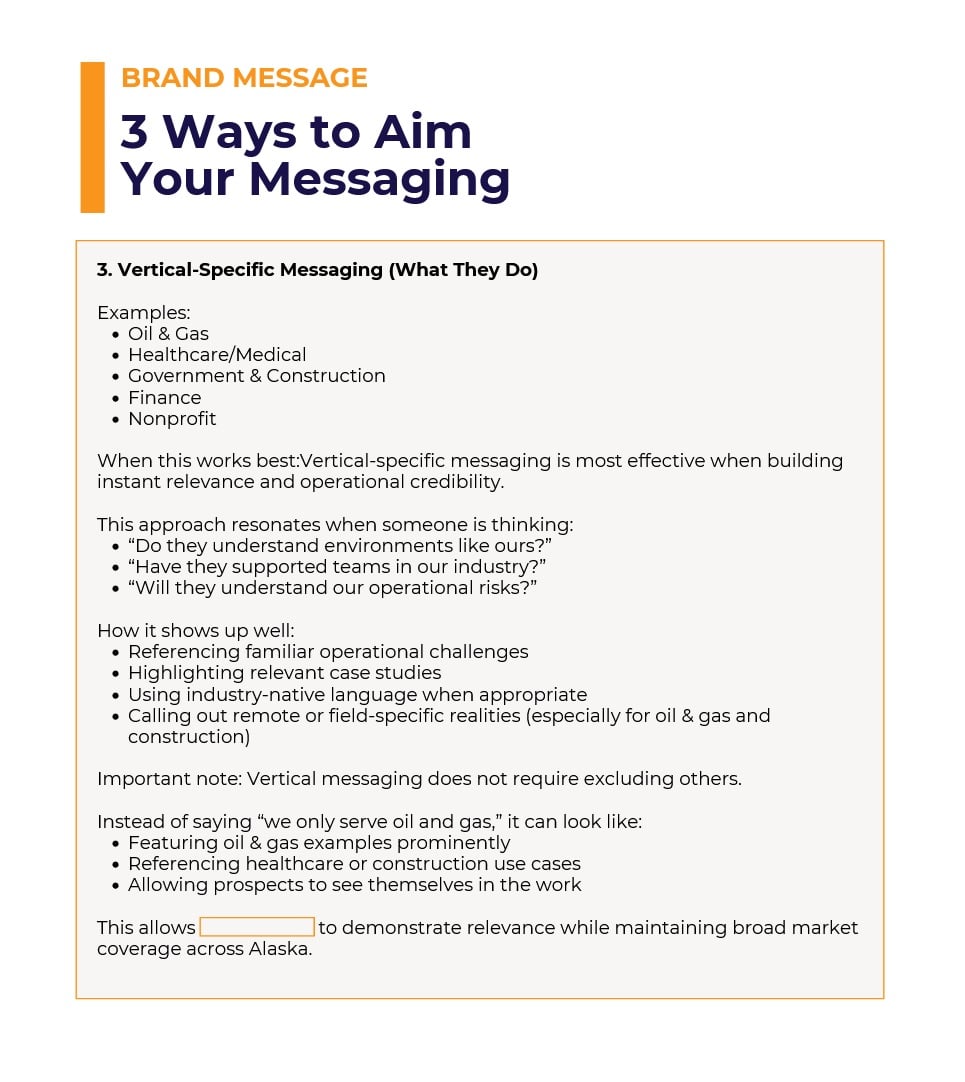
For one IT-focused brand operating in a very specific market, their core messaging started out broad. Their BrandScript outlined what they did, but it didn’t fully reflect the unique context their audience was operating in.
Once we refined their messaging through a vertical lens, things shifted. Instead of general language, we leaned into the specific challenges and realities of that industry. The result was messaging that felt much more tailored, like it was written for that audience, not just about them.
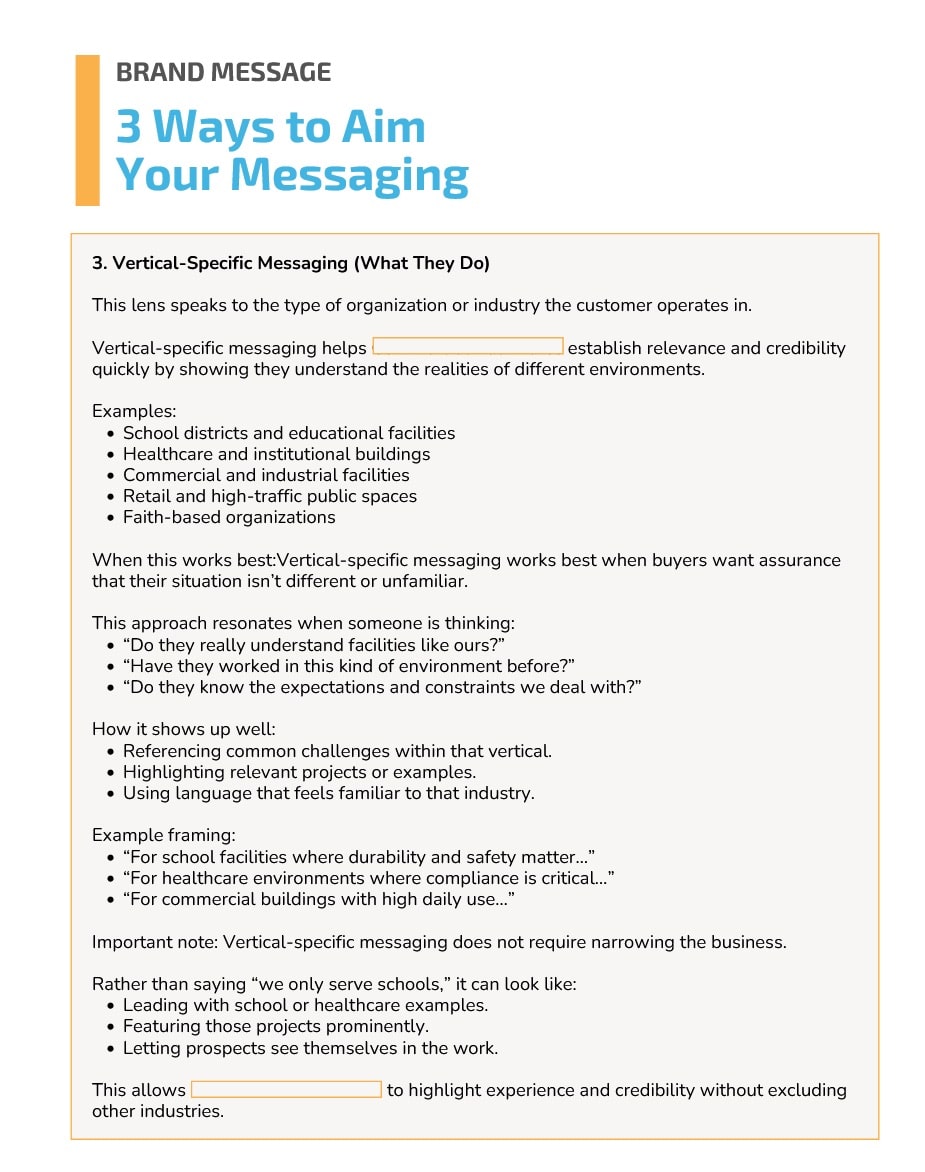
We took a similar approach with a commercial brand in a different space.
They had a solid foundation, but their messaging was doing a lot of heavy lifting to try to speak to everyone at once. It was clear, but it wasn’t as specific as it could be.
By narrowing in on the verticals they most often served, we were able to highlight more relevant examples and reflect the real-world context their audience was in. That made the message feel more focused and credible, without limiting who they could work with.
In both cases, the work itself didn’t change. But the way it was communicated did, and that made a huge difference in how fast the right people could connect with it.
Important Note: You Don’t Have to Niche Yourself Out
A lot of people worry that if they focus on one group, they’ll end up pushing others away.
Totally fair question. But that’s not how this works.
Vertical-specific messaging isn’t about putting yourself in a box. In reality, it’s about leading with what you do well.
You can talk about your experience with a specific type of organization without shutting the door on anyone else. In fact, it usually does the opposite. When people see that you clearly understand one group, it builds confidence that you’ll understand them too.
So instead of trying to say everything to everyone, you’re being more specific about where you shine.
And that makes your message feel credible and a whole lot easier for the right people to connect with.
How to Start Using Vertical Messaging
Before you hit the panic button, know you don’t need to overhaul everything to use this.
Start by looking at the organizations you work with. Who do you connect with? Where have you seen the strongest results? There’s usually a pattern, and that’s your starting point.
From there, it’s a matter of making a few thoughtful shifts:
- Choose 1-2 verticals you want to lead with
- Look at your messaging: does it feel broad or specific?
- Add in real examples and stories from those sectors
- Use language your audience would relate to
- Call out the challenges they’re experiencing
Most of the time, this doesn’t take much. A few changes can be enough for someone to read your message and think, “Okay, these are our people.”
Clarity Gets Attention, Relevance Builds Trust
A relevant message makes the fit feel obvious.
Vertical-specific messaging helps your audience trust your expertise sooner and feel better about taking the next step.
You don’t need to completely reinvent your messaging. Make a handful of updates to be more specific and connected to the people you serve best.
If your current message feels like it could be any one of your competitors, that’s a great place to start. Small adjustments can go a long way in terms of conversions.
Ready for a message that feels clearer and more persuasive? Let’s talk.